FAQs for Veterinarians
No matching FAQs found. Try a different keyword.
Quick Links
General Questions
What is MiDOG®?
MiDOG® is a state-of-the-art testing facility employing the latest, cutting-edge, molecular-based and Next-Generation DNA Sequencing technologies to accurately identify and characterize microbial populations in collected samples. The presence of both bacterial and fungal pathogens as well as antibiotic susceptibility (resistance) are revealed using the proprietary pipeline developed for the MiDOG® service offering.
Want to learn more? Watch our summary video here!
What is the MiDOG® All-in-One Microbial Test?
The test is comprised of two parts:
1) A swab collection kit for sampling done by the veterinarian and 2) a Next Generation DNA sequencing service performed at the MiDOG® testing facility on the samples submitted by the veterinarian.
What does the MiDOG® All-in-One Microbial test provide to the veterinarian?
The veterinarian is provided a comprehensive report outlining the results of the test. The report consists of three parts:
- Bacterial and fungal pathogens detected.
- Antibiotic resistance profile for each identified bacterial pathogen.
- Supplemental data: Anything unusual that we find when comparing the sample to our clinically healthy canine database, as well as supplemental data on bacterial and fungal profile
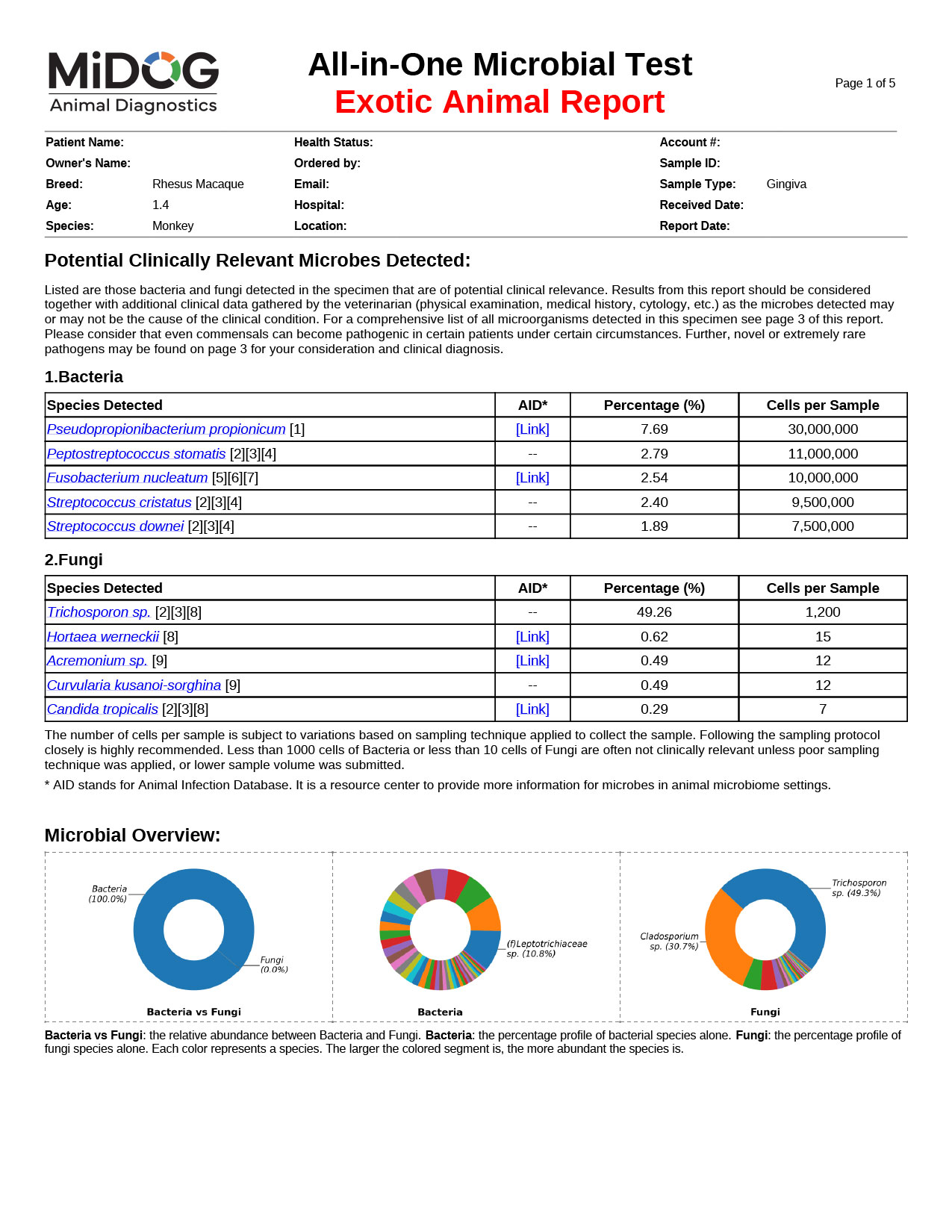
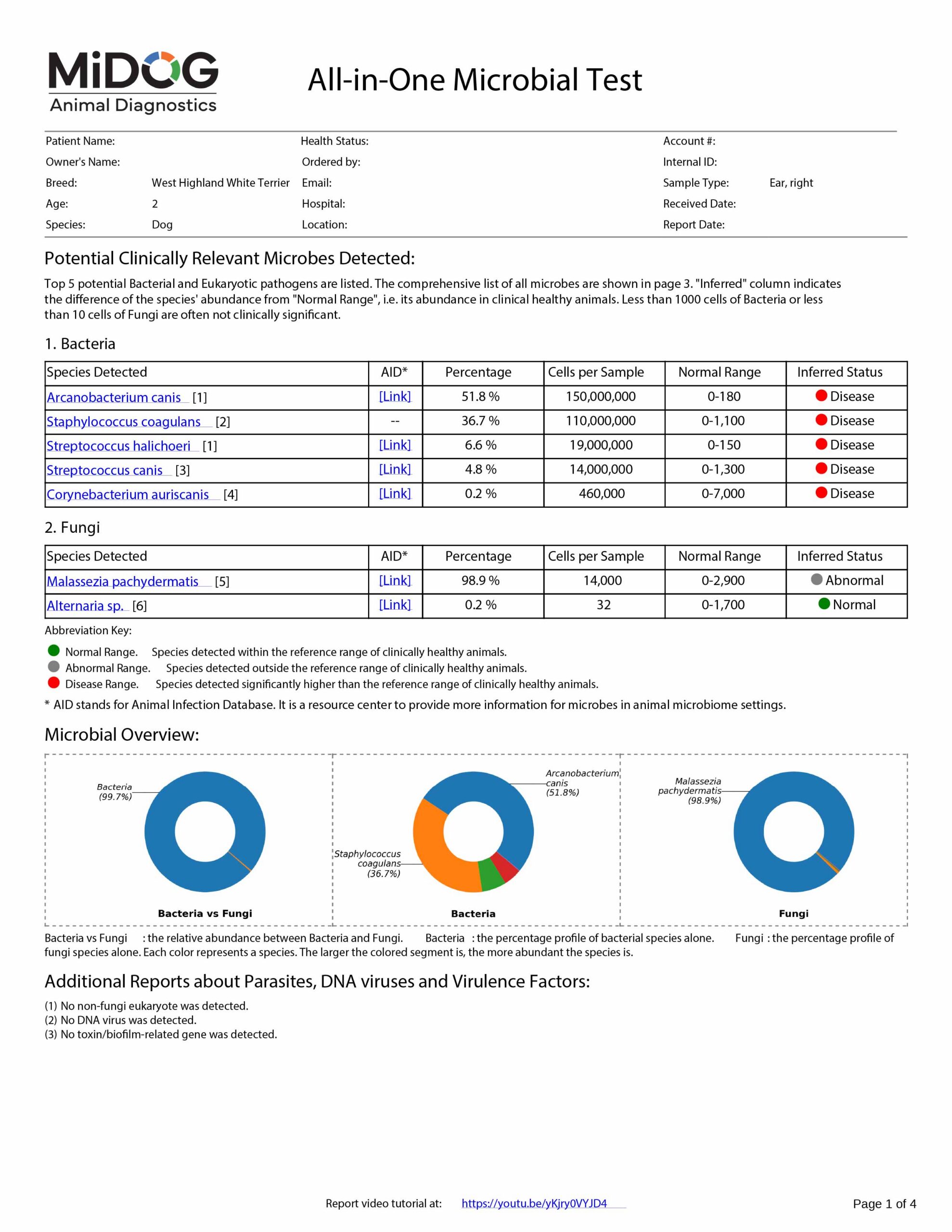
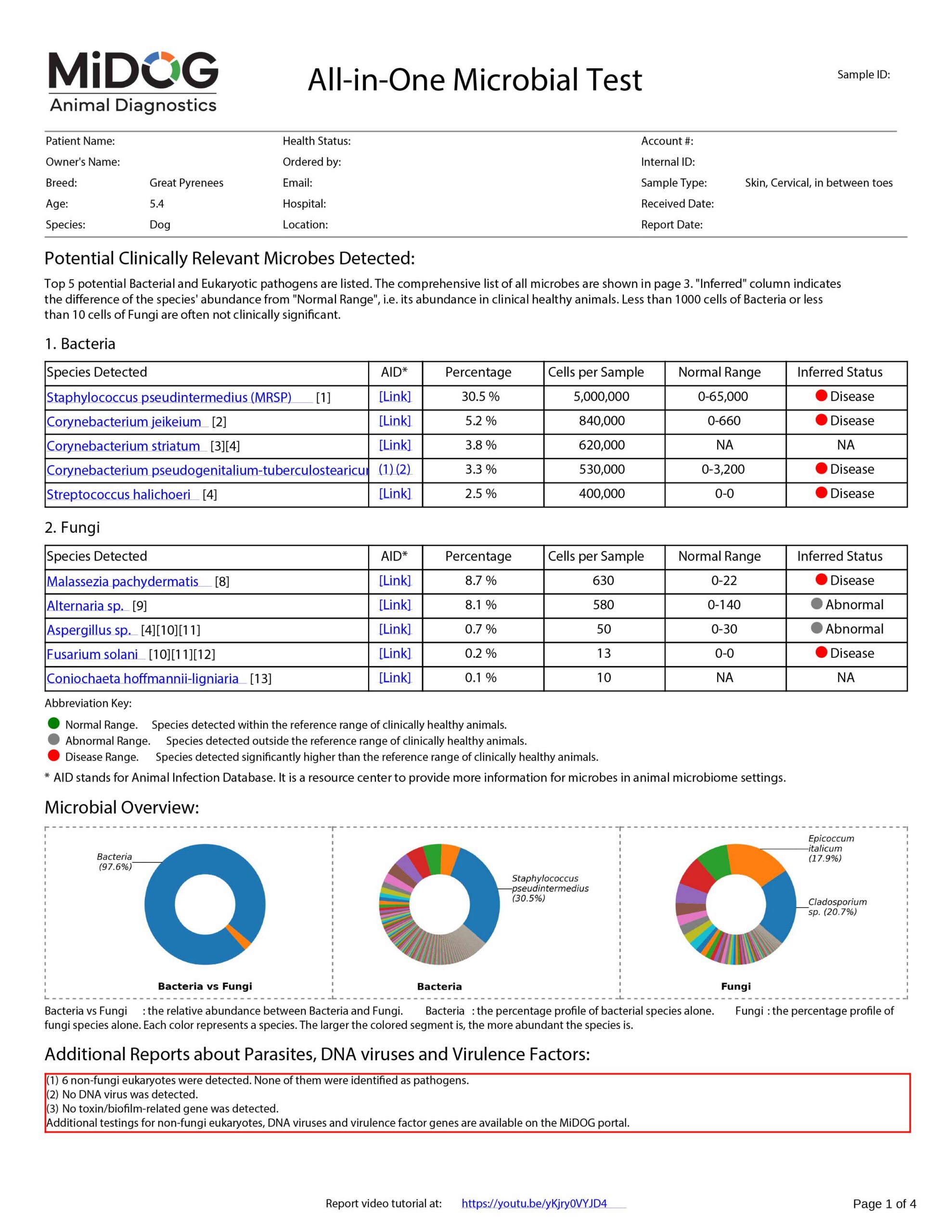
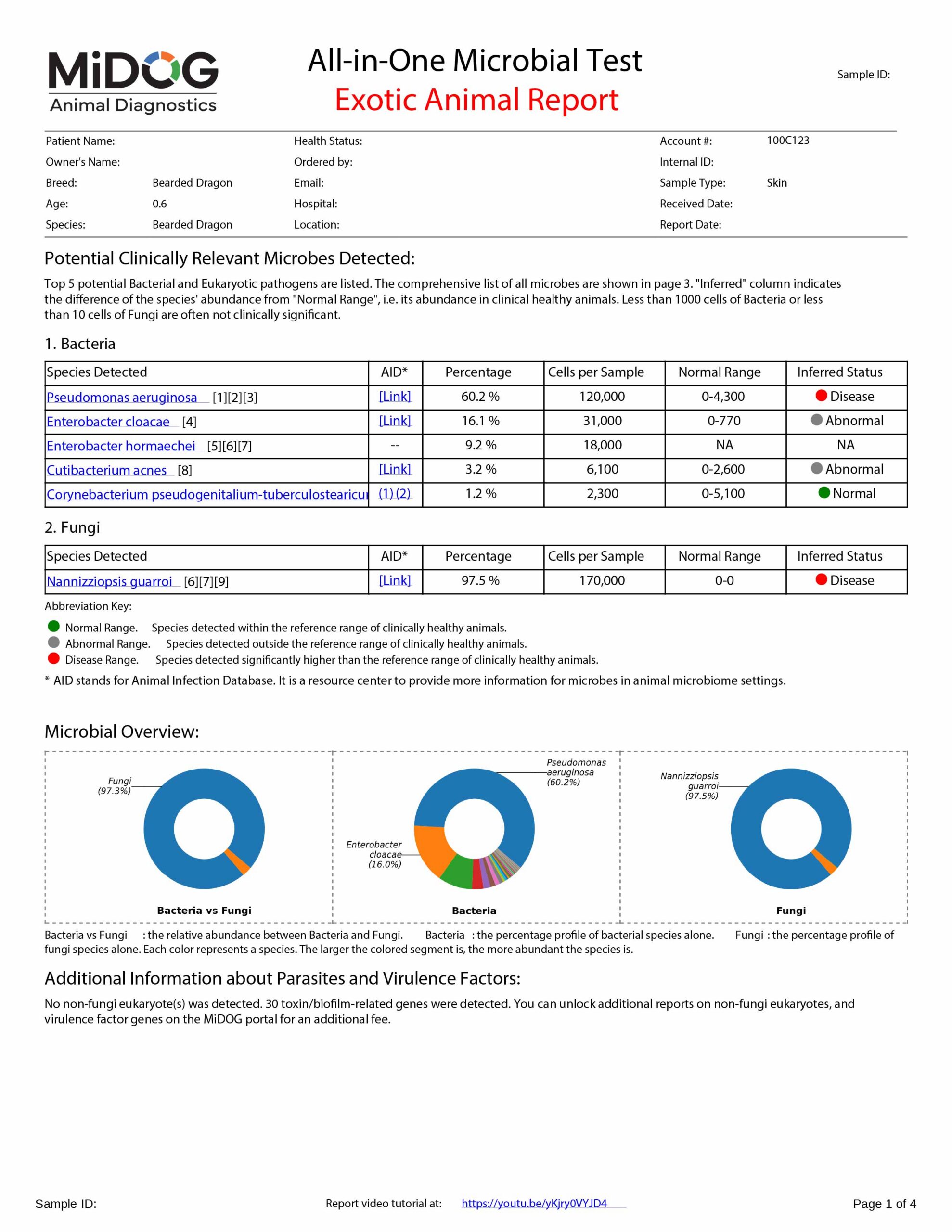
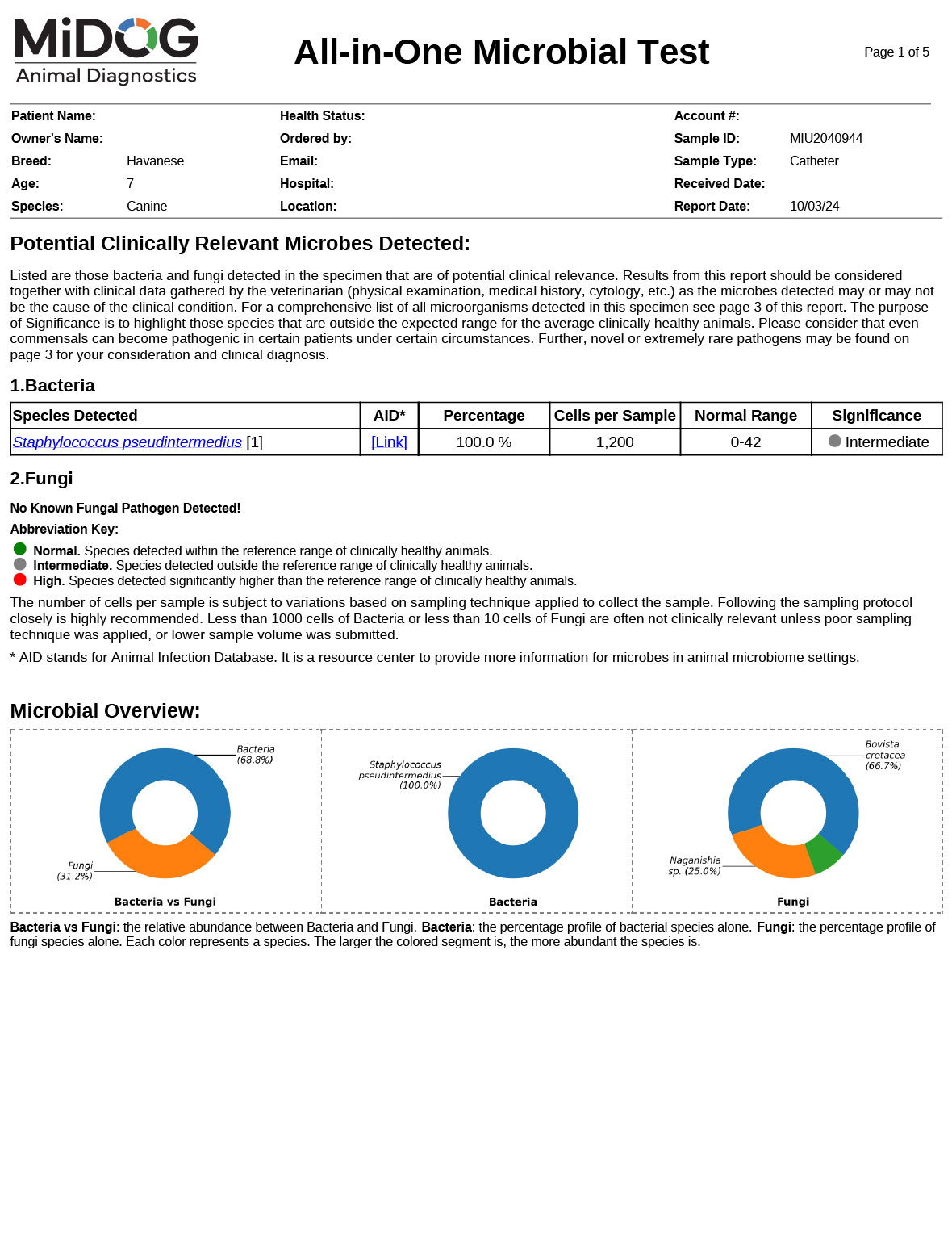
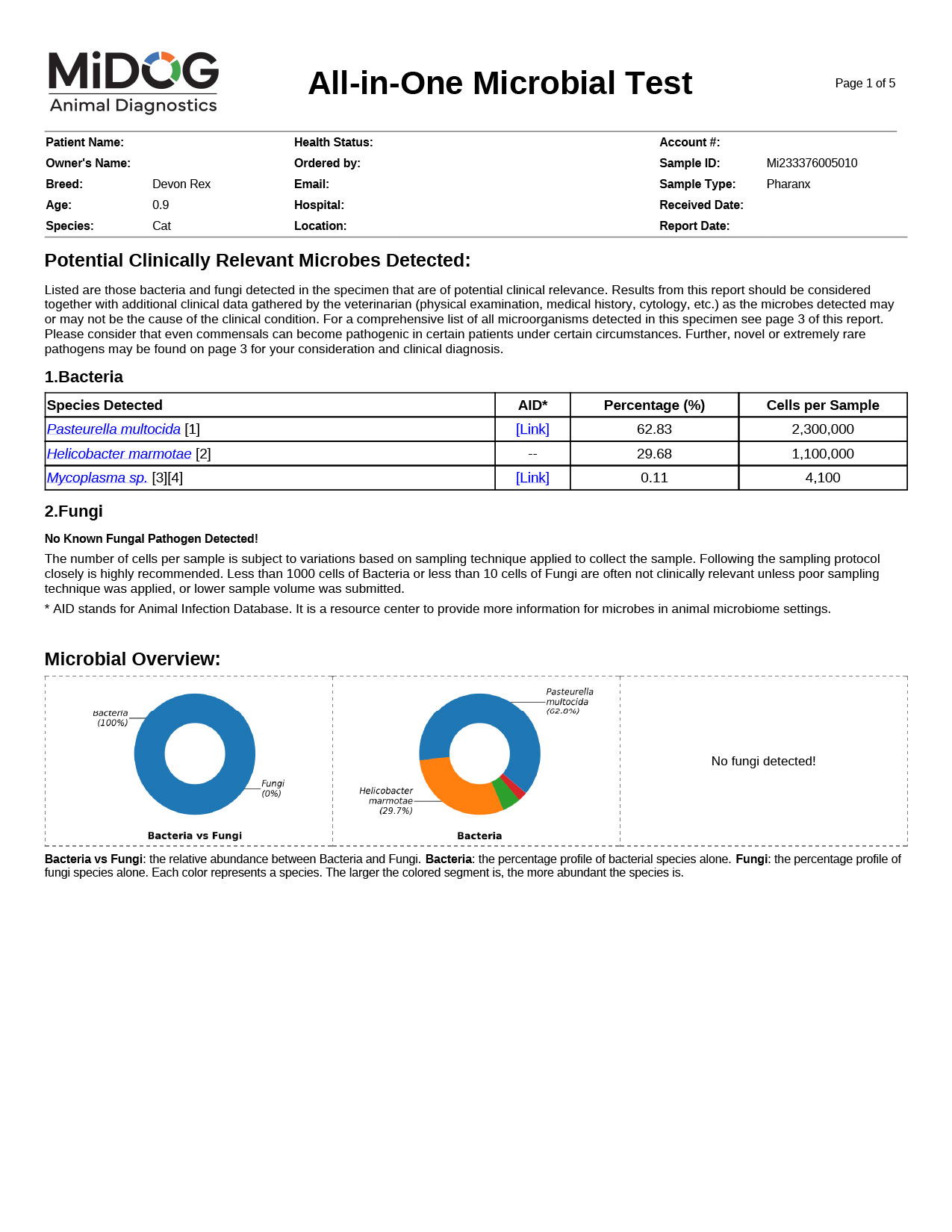
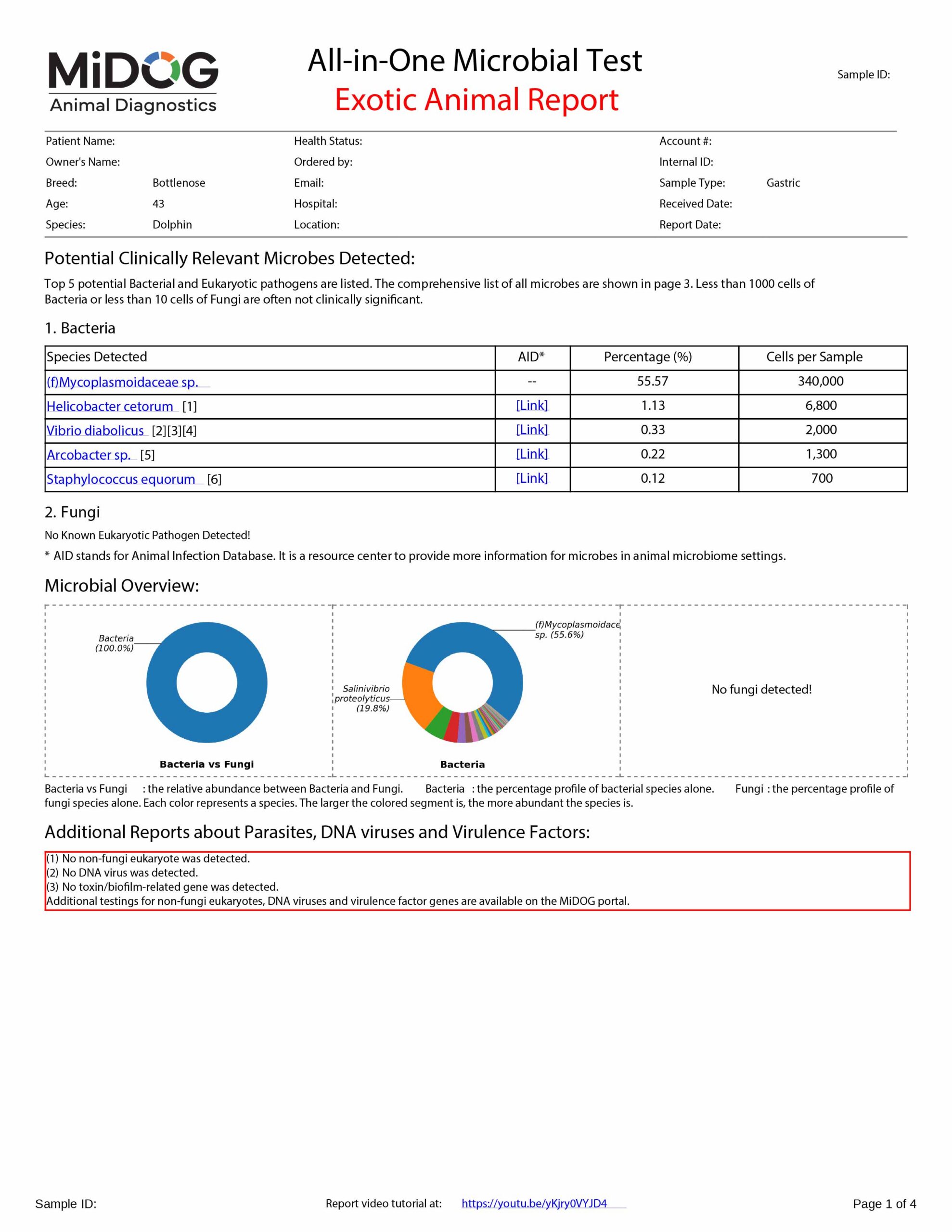
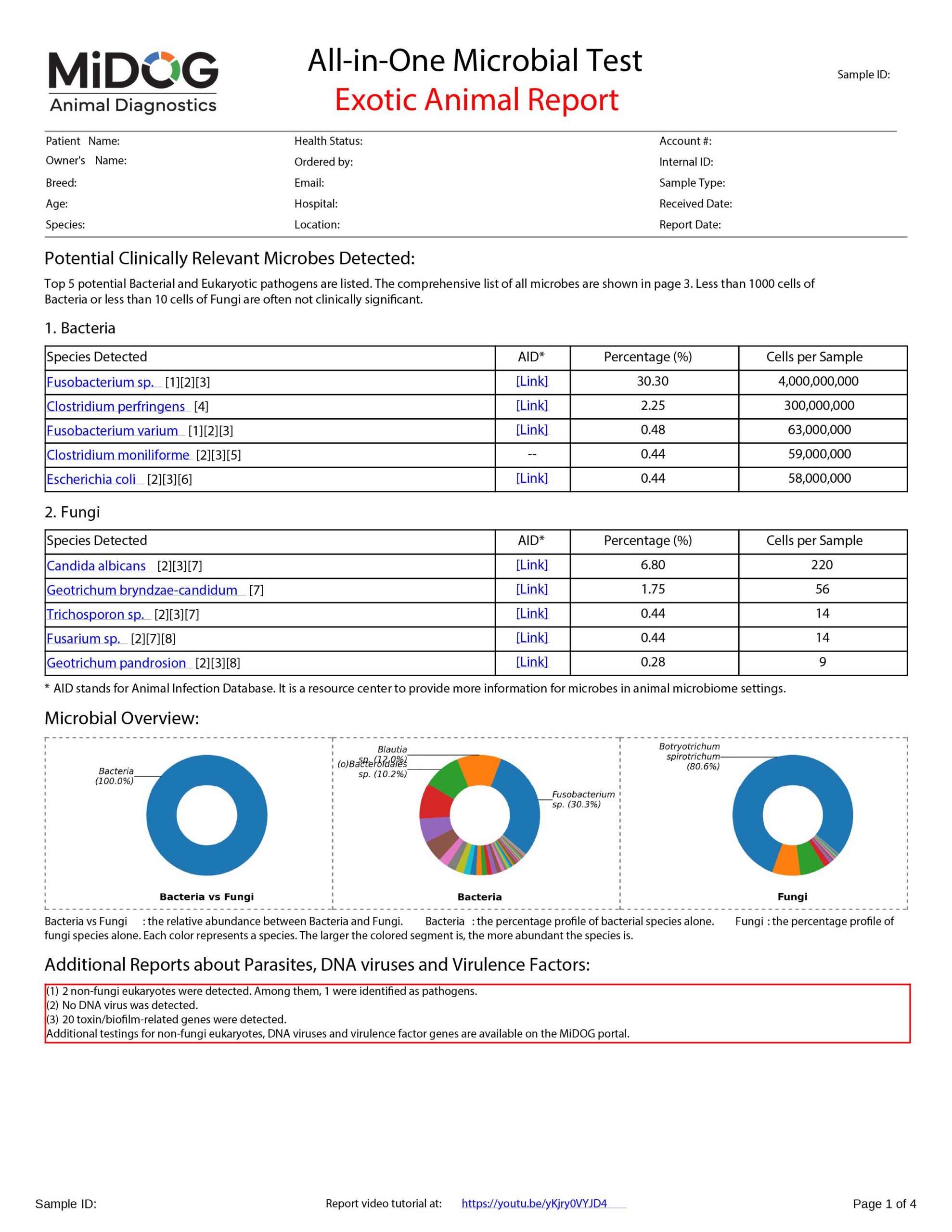
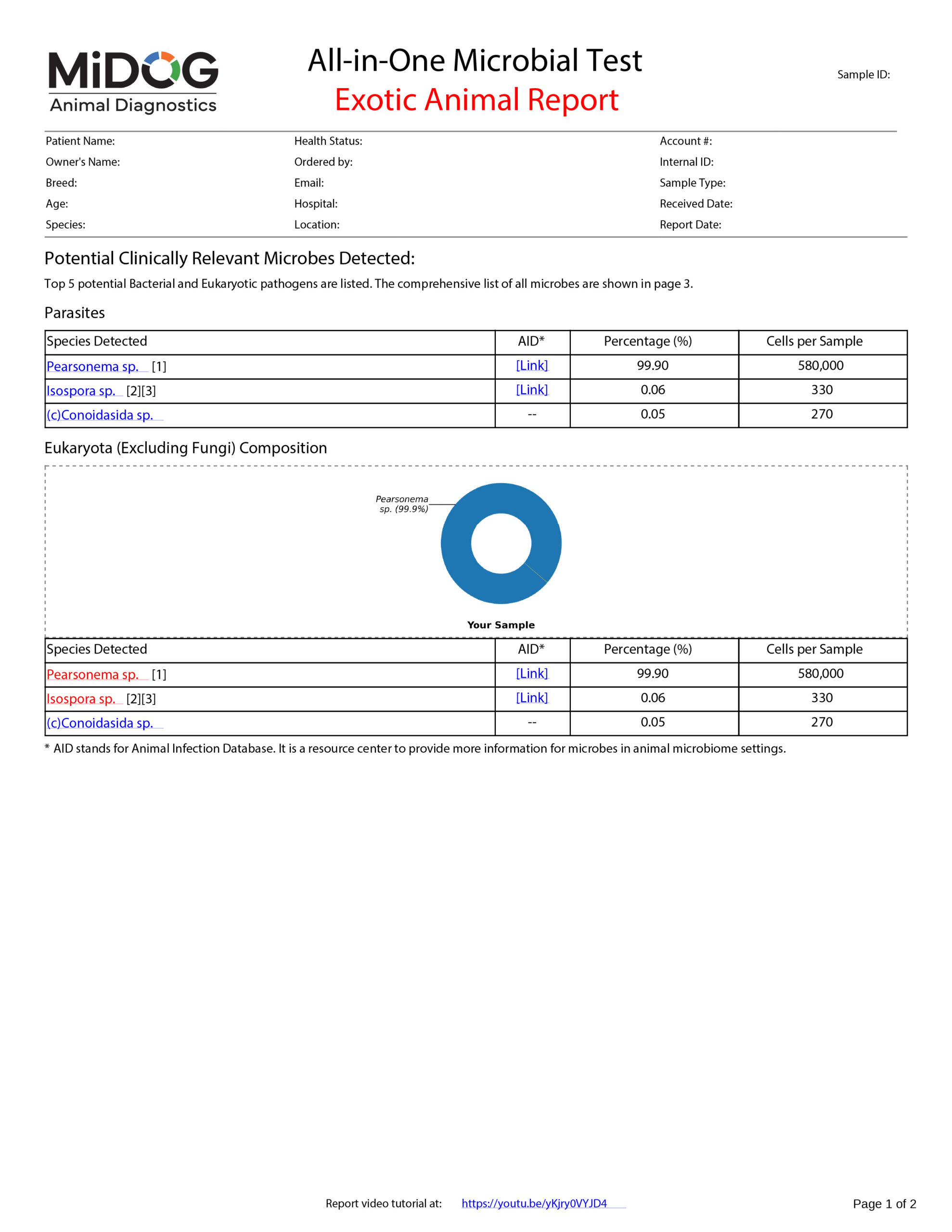
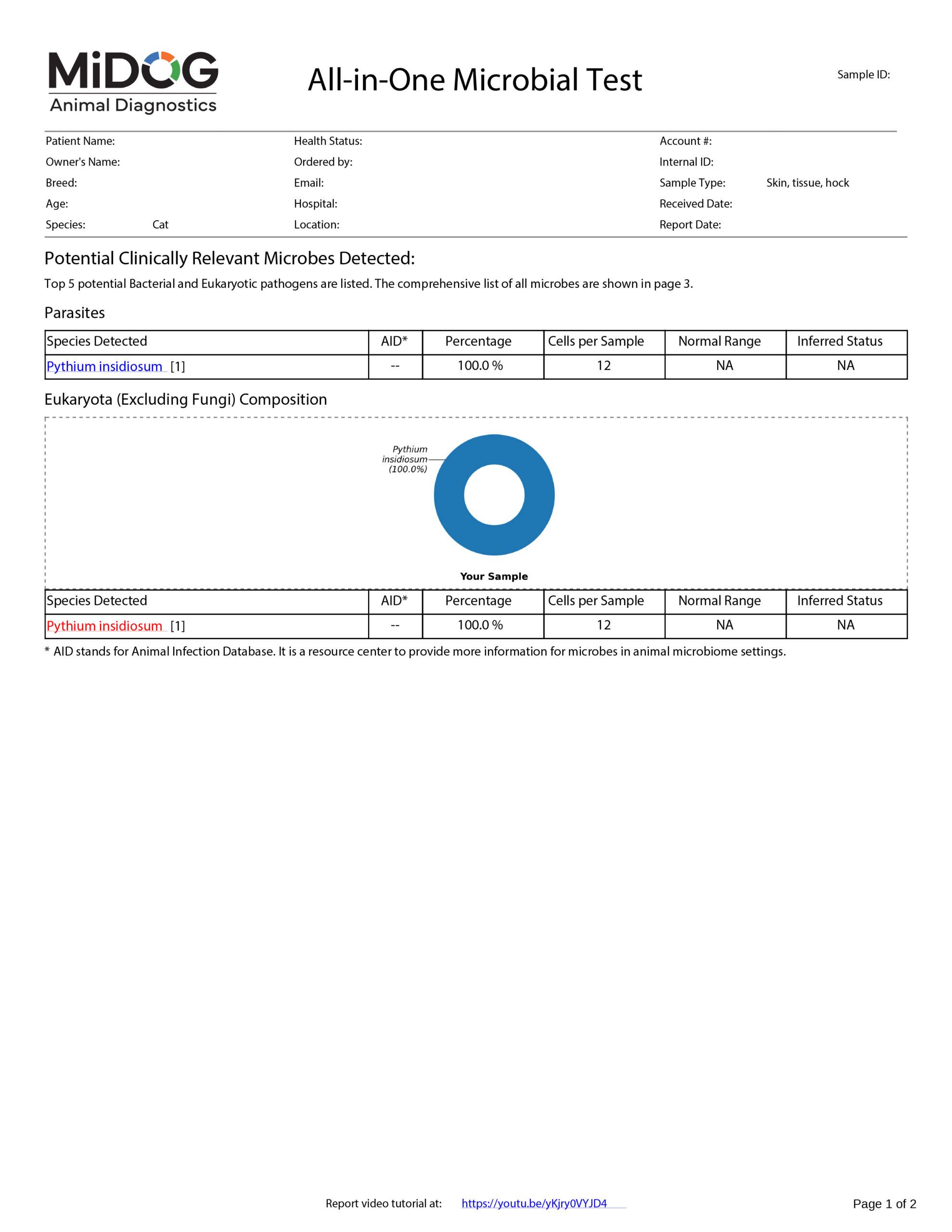
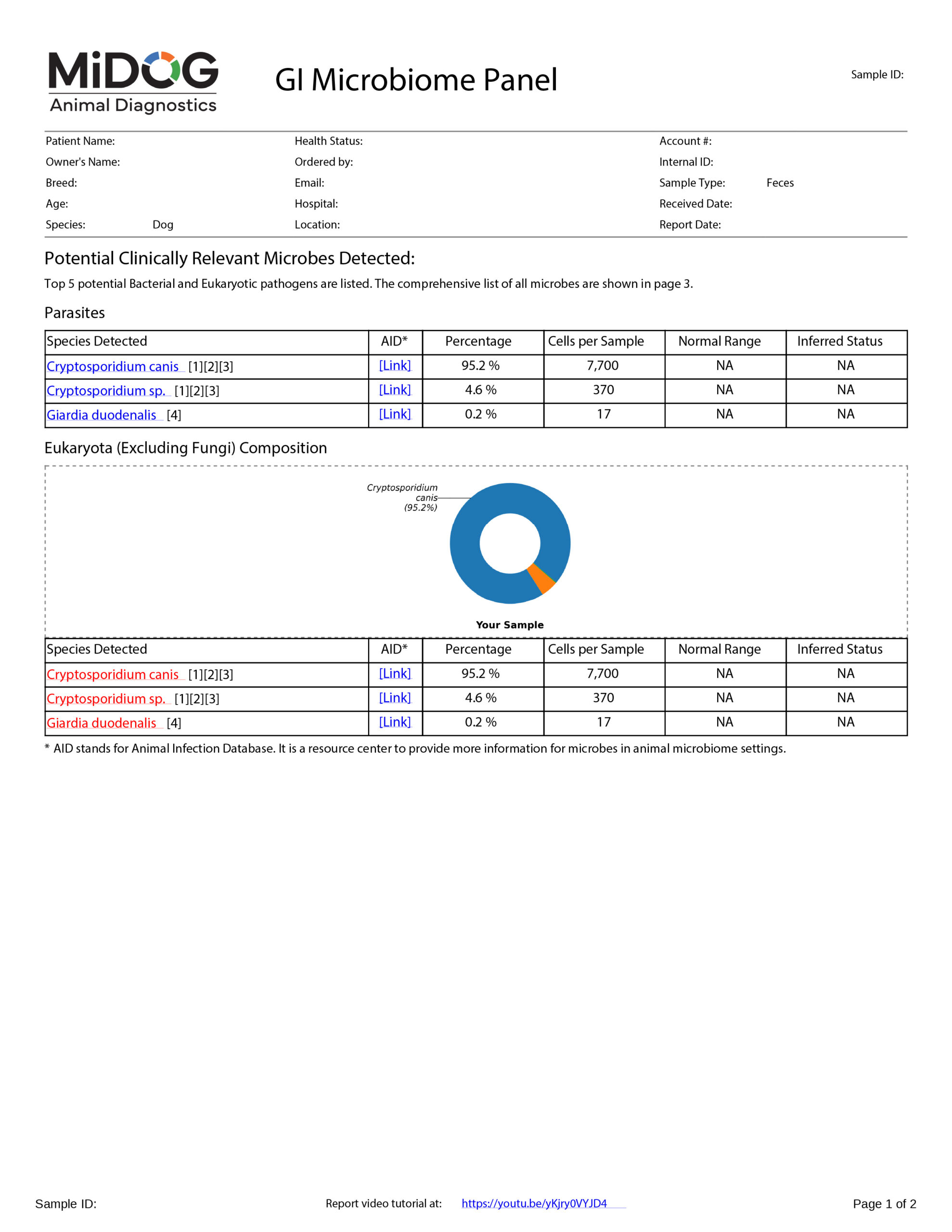
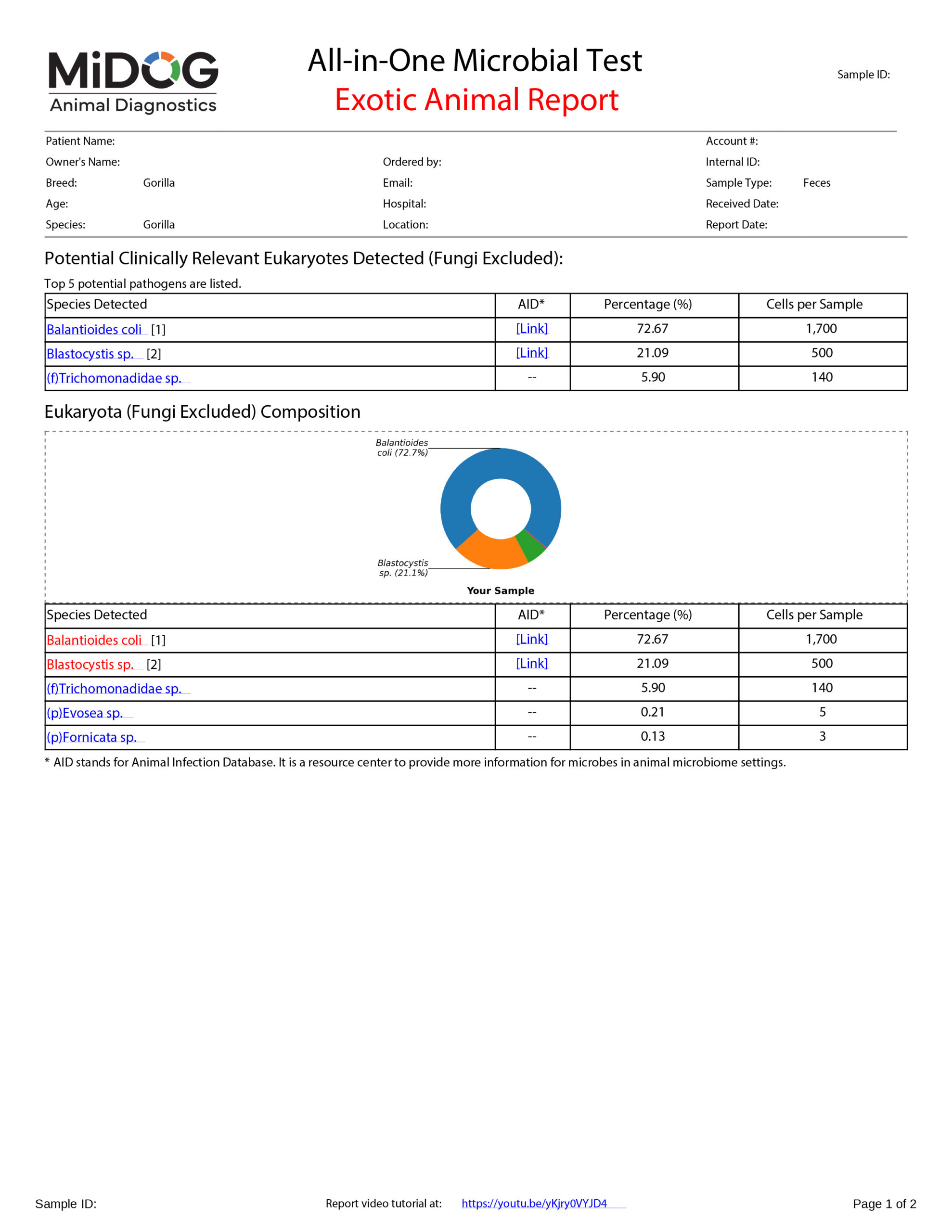
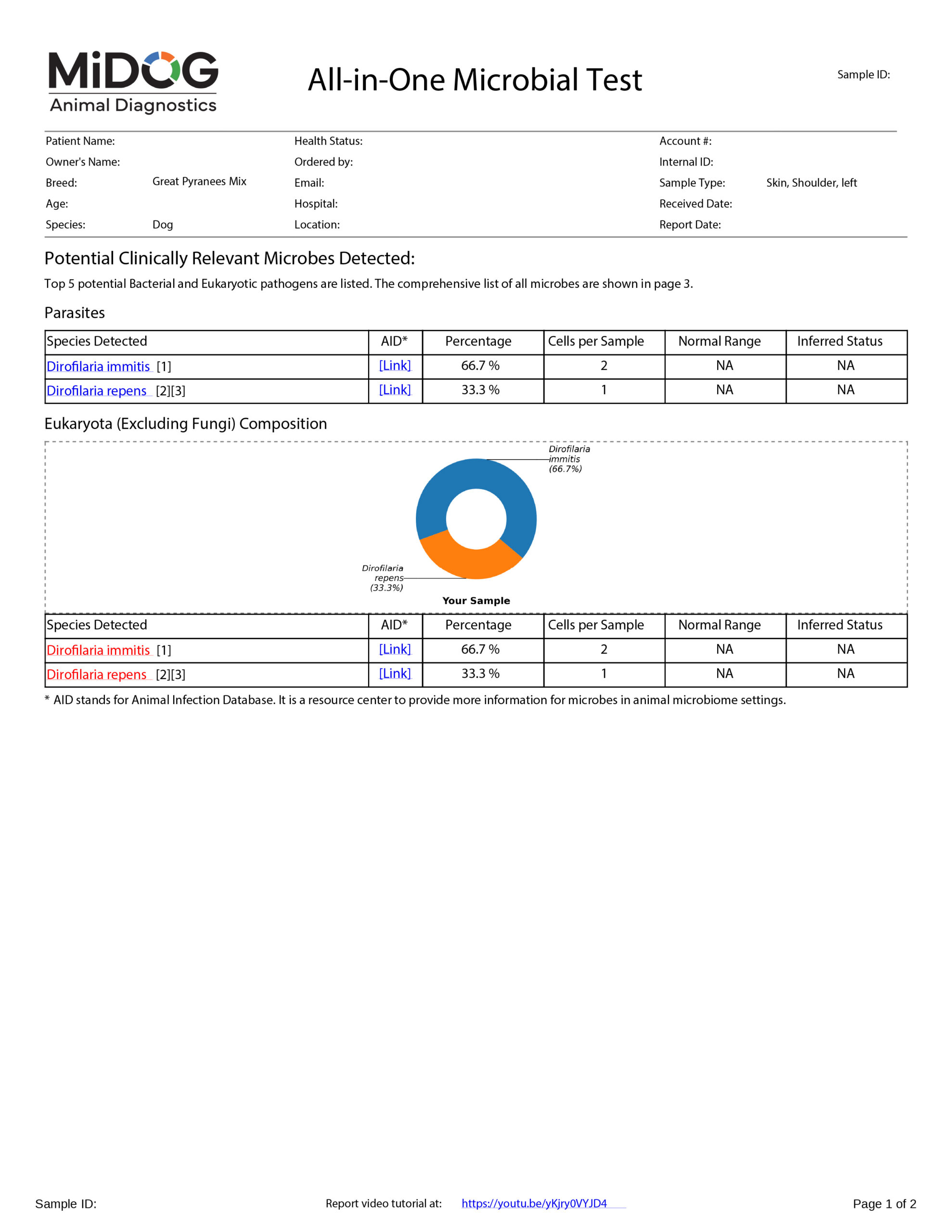
All in just one test! A sample report is shown here.
Watch a video explaining the different components of the report here.
Where can I find a list of the organisms covered by this test?
There is currently no definitive list available because the MiDOG All-in-One Test detects up to 123,701 organisms, including fungi, bacteria, protozoa, and parasites. This test uses next-generation DNA sequencing, a highly sensitive, molecular-based diagnostic tool.
The MiDOG All-in-One Test uses Whole Genome Sequencing to analyze microbial DNA directly from submitted samples, supporting broad detection of bacteria, fungi, and parasites. Sequencing data is compared against curated reference databases to identify organisms and quantify their abundance. The test also detects antimicrobial resistance markers, providing additional information to support veterinary treatment decisions alongside the patient’s clinical findings.
After sequencing, the DNA data is compared against extensive genomic databases to identify species and assess whether they are known pathogens. Current databases contain billions of sequences covering more than 450,000 documented species. If a sequence is not yet described, the test identifies the closest known relative.
In short, this means the MiDOG All-in-One Test can detect virtually any bacterial or fungal species of interest present in the sample.
Can I submit a sample from a patient that is currently on antibiotic treatment?
Yes, we can test patients that are currently taking antibiotics. We are able to see if the pathogen(s) are responding to the treatment, if there may be a secondary pathogen that is resistant to the antibiotic, and/or if commensals are impacted by the treatment as well. Especially for skin or ear swabs or feces, this is a great approach to track the real time response of the microbiome and pathogens to the antibiotic.
Ideally, the veterinarian would collect a sample before the treatment to select the most appropriate antibiotic (if needed), during the antibiotic treatment to see if the pathogen is responding to the treatment, and afterwards to see if the infection has cleared. Commensals may also be impacted by the treatment, and a lack of microbial diversity after an antibiotic treatment may be suggesting the use of probiotics in some cases. This approach has been previously shown in the Journal of Investigative Dermatology, Bradley et al. 2016 (https://www.sciencedirect.com/science/article/pii/S0022202X16004553)
How long after an antibiotic treatment should I wait to submit a sample?
There is no one-fits-all answer for this question. It depends on the sample type, the antibiotic treatment, the dose, and the question the clinician would like to answer. Please also refer to question “Can I submit a sample from a patient that is currently on antibiotic treatment?”. The amount of time an antibiotic can stay in the system can vary greatly (between hours and days), and the time for the commensal/healthy microbiome population to go back to ‘normal’ varies accordingly. A rule of thumb is, if the patient is no longer showing clinical signs of infection, please wait one week to submit a check up sample.
Can MiDOG test samples from any animal species?
Yes. MiDOG processes samples from all animal species and is not limited to canine or feline patients. Testing can support companion animals, equine and livestock patients, birds, reptiles, amphibians, fish and aquatic species, exotic animals, zoo patients, wildlife, and conservation cases.
Examples include dogs, cats, horses, rabbits, ferrets, parrots and other birds, snakes, lizards, turtles, tortoises, frogs, cattle, pigs, sheep, goats, poultry, fish, sharks, marine mammals, big cats, primates, and many other species.
MiDOG analyzes microbial DNA directly from the submitted sample, allowing infectious disease investigations across diverse host species without relying on a host-specific diagnostic panel. Appropriate sample types and collection methods depend on the anatomical site and clinical question. For case-specific collection guidance, contact the MiDOG team at info@midogtest.com or (833) 456-4364.
MiDOG Enhanced Testing
MiDOG All-in-One Extended Testing
The MiDOG All-in-One Test uses Whole Genome Sequencing to provide broader microbial detection and additional genomic insights. Depending on the testing option selected, these capabilities include:
-
Parasite detection: Identification of protozoan, nematode, and flatworm parasites alongside bacteria and fungi.
-
Biofilm-associated genes: Detection of bacterial genes associated with biofilm formation, which may contribute to persistent or recurrent infections.
-
Virulence and toxin genes: Identification of bacterial genes associated with disease potential, providing additional context for interpreting microbial findings.
What new types of pathogens will be detectable?
- The new MiDOG All-in-One test will detect all Eukaryotic parasite species down to the species level and all bacterial and fungal pathogens in our previous service. The new pathogens will include:
- All Protozoan parasite species (including but not limited to: Entamoeba, Giarda, Cystoisospora, Eimeria, Cryptosporidium, Toxoplasma, Plasmodium, and Tritrichomonas)
- All Hookworm, roundworm, whipworm, and tapeworm species (including but not limited to: Dirofilaria, Toxocara, Baylisascaris, Trichuris, Diplidium, Echinococcus, Echinostoma, Taenia, Fasciola, Leishmania, Opisthorchis, Rallietina, Syphaci, Trichinella
All Oomycete parasite species (including but not limited to: Pythium, Saprolegnia, Aphanomyces, Halioticida)
What are Biofilms?
A biofilm is a community of bacteria that attach to surfaces and produce a protective matrix. In clinical contexts, biofilms can make infections more difficult to treat because they:
- Contribute to antibiotic resistance by creating microenvironments where bacteria can survive higher drug concentrations
- Facilitate chronic or persistent infections
- Increase the risk of device-related infections (catheter and surgical implants)
- Promote recurrent urinary tract infections (UTIs) by allowing bacteria to persist on the bladder surfaces
- Impair wound healing by creating a persistent source of infection
- Contribute to chronic or non-healing wounds, such as diabetic foot ulcers or pressure sores
The MiDOG All-in-One test can detect bacterial genes associated with biofilm formation for each individual case, providing clinicians with actionable insights that were previously not accessible.
Which Virulence/toxin genes will MiDOG All-in-One test for?
Toxins and virulence genes are the weapons of bacterial pathogens, allowing them to initiate disease and cause clinical signs associated with illness. Toxin/virulence genes can help guide clinical decisions by helping to signal the bacterial pathogens of concern in each case. The MiDOG All-in-One will detect over 120 families of bacterial toxin genes including:
- Enterotoxins and Shiga toxins (Shigella and pathogenic coli strains)
- Anthrax toxin (Bacillus anthracis)
- Tetanus toxin (Clostridium tetani)
- Diphtheria toxin (Corynebacterium)
- Botulinum toxins (Clostridium botulinum)
- Pertussis toxins (Bordetella pertussis)
- Typhoid toxins (Salmonella)
- Hemolysins – toxins possessed by several pathogen species that allow them to cleave red blood cells and other host cells (Rickettsia, Streptomyces, Actinobacillus, Aeromonas, UTI, and septic E. coli pathogen strains)
What major groups of Toxin families can the All-in-One Test screen for?
- Enterotoxins
- Food poisoning and other GI tract issues
- Exotoxins
- Toxins that the bacteria excrete to poison the host and surrounding environment
- Hemolysins/Lysins
- Toxins that bacteria produce to cut open red blood cells and other cells to feed off the host.
- Endotoxins
- Toxins that bacteria produce internally that are stored in the bacterial cells and released when they die.
- Can cause toxic shock syndrome if too many endotoxin-producing bacteria are killed at once.
Abscess Sampling for Bacterial NGS
What is the best sample type for NGS from an abscess?
The preferred sample is needle-aspirated pus from the abscess cavity or deep tissue from the abscess wall. These provide the highest pathogen yield and lowest contamination.
Are swabs recommended?
Swabs are not ideal and should only be used if aspiration or tissue collection is not possible.
If I must use a swab, where should I collect from?
Swab the deep advancing edge or abscess wall after opening and cleaning the lesion. This area best represents active infection.
Where should I NOT swab?
Avoid:
- Superficial drainage/pus
- Necrotic center
- Surrounding intact skin
These areas often contain contaminants or colonizing flora.
Why does sample depth matter for NGS?
NGS detects all DNA present, so superficial samples increase background contamination, making results harder to interpret. Deep samples better reflect true pathogens.
What is the hierarchy of sample quality?
Avoid:
- Aspirated pus (best)
- Deep tissue biopsy
- Deep swab of abscess wall
- Surface swab (worst)
Ordering
Where can I order the MiDOG® Canine Microbial Test?
To order a sample kit simply go to the ‘ORDER’ tab on this website or send us an email to orders@midogtest.com.
Please note that the MiDOG® Canine Microbial Test is only provided to veterinarians.
How many swabs are included in MiDOG® All-in-One Microbial Test Swab Collection Kit?
Five swabs and five collection tubes are included.
Do I have to pay for shipping?
The collection kits are free of charge; only a shipping fee of $22 is applied on all domestic orders.
Science
What is Next Generation Sequencing?
Next-Generation Sequencing is a DNA-based technology that profiles the entire microbial community in a sample, including bacteria, fungi, and other organisms, without relying on culture. Instead of targeting a few suspects, NGS sequences all the microbial DNA present, delivering species-level identification with much higher sensitivity than traditional methods. It’s widely regarded as a gold-standard approach for comprehensive microbial detection and characterization.
More information about NGS can be found on Illumina’s® webpage.
Sample Collection
How do I collect a sample for the MiDOG® Service?
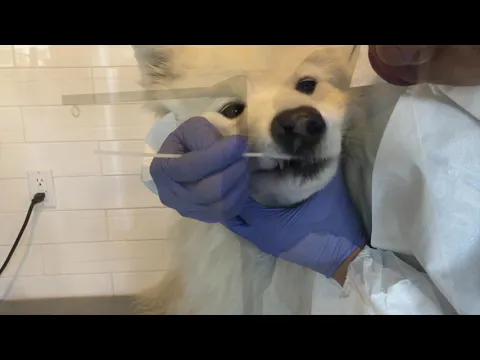
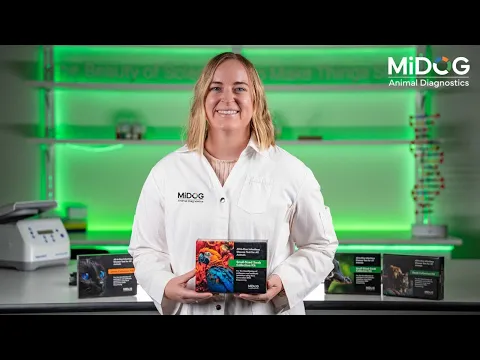
Follow the instructions provided in the MiDOG® All-in-One Microbial Test manual. The Swab Collection Manual can also be found here, and the Urine Collection Manual can be found here or watch our MiDOG® sample collection instruction video here. Please don’t hesitate to contact us should you have any questions.
Where should I send my samples?
We provide you with a prepaid and pre-labelled FedEx envelope to send your samples to us. Our laboratory address is
MiDOG Laboratory, 14762 Bentley Cir., Tustin CA 92780.
What is the turnaround time for MiDOG results?
MiDOG results are typically available within 2-3 business days after the sample is received and accessioned by the laboratory. Shipping time to the laboratory is not included in the testing turnaround time.
Once testing is complete, the report is made available through the MiDOG Lab Portal and the appropriate account contact is notified that the patient results are ready for review.
Can I submit samples from species other than dogs?
Yes. MiDOG accepts samples from any species, including domestic, exotic, and wildlife. The assay performs the same comprehensive DNA-based microbial detection across all submissions.
Can I send multiple samples in one envelope?
Yes, please send multiple samples in one envelope.
Can I submit less than 2ml of fluid samples?
If only less than 2 ml of fluid can be collected from a patient, it is still possible to submit the sample. While a larger sample volume would be ideal to ensure accuracy of the analysis, we will process even samples with smaller volumes.
Please note, the detection limit of the MiDOG All-in-One assay is 200 cells per sample. If less than 2ml of submitted, the report may not list any bacteria or fungi.
Can I submit tissue samples?
Animal tissue samples may be submitted in the MiDOG collection tube with the white label. For best preservation, the tissue should be broken down or ground using sterile technique before being added to the tube. Smaller tissue pieces allow the buffer to better penetrate the sample, helping preserve the microbial DNA for testing.
Please do not send additional tissue or material outside of the MiDOG collection tube.
What is the difference between a small-sized swab and a regular one?
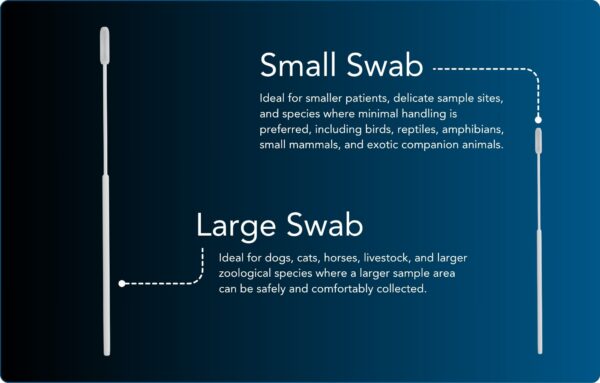
Can I submit samples of body parts, for example a toe, a leg, or tail?
Only samples inside the MiDOG collection tubes will be accepted. To ensure the preservation of the material, please grind up the sample in a sterile mortar and pestle before adding it to the MiDOG collection tube with the white label.
Accepted Sample Types
All samples must be submitted using the official MiDOG collection tubes, no exceptions. Urine samples must be collected in the MiDOG urine collection tube (yellow label), while all other sample types must be placed in the MiDOG collection tubes with white labels.
Any samples not submitted in MiDOG collection tubes will be rejected and discarded. Please do not include any additional materials outside the designated collection tubes.
MiDOG accepts all types of animal samples, including blood. For blood samples, we accept both serum and plasma, with an ideal volume of 0.5–1 ml, submitted in the white tube.
Does MiDOG accept fecal samples?
Yes. MiDOG accepts fecal samples from any animal species for applicable testing, including MiDOG All-in-One and Parasite-Only Testing.
Use a MiDOG Sample Collection Kit and follow the supplied collection instructions. Parasite-Only Testing uses the same MiDOG kits and collection methods, so no separate or specialized collection kit is required.
Collect representative fecal material while minimizing contamination from litter, bedding, soil, disinfectants, or other environmental material. Contact the MiDOG team if you need collection guidance for a particular species or clinical case.
How much urine is needed for MiDOG testing?
Submit 2–4 mL of urine in the yellow MiDOG urine collection tube. Liquid urine should be added directly to the tube rather than applied to a swab.
How do I get my MiDOG® results?
The results will be sent to the veterinarian via email in PDF format. A sample report is shown on the right.
Do I need to ship the samples on ice?
No, there is no need to store or ship your samples on ice.
How should MiDOG collection kits and samples be stored, and when do they expire?
MiDOG Sample Collection Kits and samples placed in the kit’s preservation buffer can be stored at room temperature for up to one year. Refrigeration, freezing, cold packs, and cold-chain shipping are not required.
Do not use a collection kit after its stated expiration date. If a kit is expired, damaged, or has been stored under unusual conditions, contact the MiDOG team before collecting or submitting a sample.
I sampled my patient and forgot to send the sample in. Is the sample still OK?
Yes, it is. The DNA preservation reagent we provide you with stabilizes your sample at room temperature for up to one year.
Can I submit fluid samples?
Yes, MiDOG can test a wide variety of fluid samples, including blood. We accept both serum and plasma, with an ideal volume of 0.5–1 ml. Other acceptable fluid types include bodily fluids (e.g., bile, joint fluid, urine), washes (e.g., eye washes, nasal washes), or rinses. We require a minimum of 2 ml of liquid for testing, but 4 ml is recommended to ensure optimal accuracy.
Please ensure that the fluid sample is placed directly into the collection tube; do not submit swabs soaked in liquid.
For fluids, use MiDOG collection tubes with the white label. For urine samples, please use the dedicated urine collection kits, which have yellow-labeled tubes.
For more information, please call customer service at (833) 456-4364.
Can I submit water or pool samples?
Yes, it is possible to test pool or aquarium water samples as well. Ideally, 4ml of water sample is mixed with the MiDOG collection tubes with the white label. Simply close the collection tube, invert the sample tube 5 to 10 times, and send it to the MiDOG laboratory with the provided return envelopes. It is possible to use the provided sterile swab to take a swab sample of the pool filter as well. You may add the swab to the sample same collection tube as the pool water. If two separate samples are submitted, there would be a charge for two samples.
How should I submit a cerebrospinal fluid (CSF) sample for MiDOG testing?
Submit CSF directly into a white-label MiDOG collection tube containing preservation buffer. Do not apply the fluid to a swab. Cap the tube tightly, mix gently, and keep it at room temperature.
Place the tube in the specimen bag, complete the submission information through the MiDOG Customer Portal, and ship using the prepaid FedEx envelope provided with your kit.
For CSF sample-volume requirements or limited-volume specimens, contact the MiDOG team before submission.
Portal Questions
Where can I find my account number?
Click the MiDOG tab on the top right-hand corner above your clinic name.
Do I have to set up a new account if working from multiple clinics?
Yes, every clinic or hospital has their own account number, login information, and billing information.
I forgot the account password, what do I do now?
Contact the MiDOG team by email or phone at info@midogtest.com or (833) 456-4364.
I sampled my patient and forgot to send the sample in. Is the sample still OK?
Yes, it is. The DNA preservation reagent we provide you with stabilizes your sample at room temperature for up to one year.
Is there a limit on how many test kits can be ordered?
You can order up to 5 test kits (a total of 25 test). If you need more supplies, please contact customer service via email info@midogtest.com or over the phone (833) 456-4364.
How many test preps are in each kit?
There are 5 test preps in each kit.
How can I track an order?
Your order can be tracked by the tracking number provided via email or you can call the MiDOG Customer Service department at (833) 456-4364.
Where do I pay my bill?
You can pay your bill online through the MiDOG portal, or by following the link below, by clicking the link in the email that we sent with your invoice information, over the phone at (833) 456-4364, or by mailing a check to MiDOG LLC, 14762 Bentley Cir., Tustin CA 92780.
Where do I pay my bill?
You can pay your bill online through the MiDOG portal, or by following the link below, by clicking the link in the email that we sent with your invoice information, over the phone at (833) 456-4364, or by mailing a check to MiDOG LLC, 14762 Bentley Cir., Tustin CA 92780.
Can I sign up for automated payments?
Yes, you can put your credit card on file for automated payments.
I submitted a sample, but it shows as not received. Where can I get more information?
You can track it the FEDEX return labels provided with your order. We recommend always noting this information before sending us a sample for faster tracking. If you have not recorded the tracking number used, you can call our customer service department and they can help you locate the tracking number.
How do I locate my patient’s report and view my report?
To view your patient’s report, click “LABS” on the top left-hand side of the screen. Enter either the “Tube Number, “Patient Name”, or owner name to filter the search results.
How do I check the status of a sample?
You can view the status by clicking the “LABS” tab.
How do I download my results?
To download your patient’s past results, click “LABS” on the top left-hand side of the screen.
Can I search my reports for a certain patient?
Yes. To search your patient’s report, click “LABS” on the top left-hand side of the screen.
Enter either the “Tube Number, “Patient Name”, or owner names to filter the search results.
How do I schedule a consultation?
You may schedule a consultation using the portal by clicking on the consultation tab. Otherwise, please send us an email or give the customer service department a call at (833) 456-4364.
Where can I find my login information?
Your login information was provided to you via email from our webservices department. If you cannot locate this information or need to reset your password, please send us an email to info@midogtest.com.
How can I add a user to my existing account?
- Click the MiDOG tab on the top right-hand corner above your clinic name.
- Click “Create new user” on the left side of the screen.
- Once all the information is completed Click “Create user” to save the information.
Where can I update my clinic information, like mail address, shipping address, billing information, etc.?
Click the MiDOG tab on the top right-hand corner above your clinic name, then click the green tab button “Edit Account Setting” to change or add the information.
Can I send samples from other species besides canines as well?
Yes, absolutely. The only difference is that we cannot compare your sample to a clinically healthy database.
How do I place an order?
Go to the “Supplies” tab on the left top side. Once on the order screen, please select the desired product and “add to cart” to complete your new order.
What types of collection kits are available?
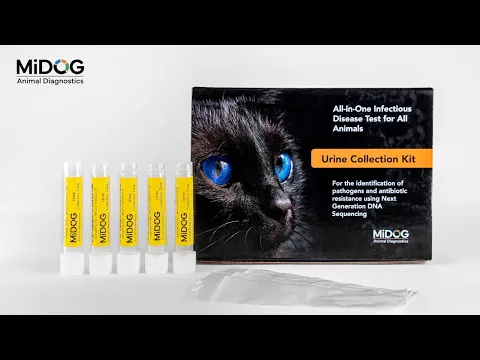
Swab, Small-sized Swab, and Urine collection kits.
Where can I find pricing information?
Pricing information can be requested via email info@midogtest.com or over the phone (833) 456-4364.
How do I order more return envelopes?
You can email info@midogtest.com or call (833) 456-4364.
How do I order more return envelopes?
You can email info@midogtest.com or call (833) 456-4364.
How can I update my billing information?
Please log into your account and update your billing information under the “PROFILE” option on the far-right hand side. Otherwise, please send us an email to info@midogtest.com or give us a call at (833) 456-4364.
How do I collect my patient’s sample?
Instructions on how to collect samples are included inside of every kit, can be found on our website in writing or video. After you have collected the sample using the MiDOG collection kit, simply send it to our laboratory for testing.
How do I enter patients’ information?
Once you have placed an order the system will automatically give you the tube identification numbers sent with the order. When you are ready to collect a sample, log onto your account, and click the “Labs” tab on the top left corner. You can then enter the information corresponding to the tube you will be using. Sample tubes that have not been used are marked as “MISSING TUBE ID”. Once all information has been added make sure to click “save changes”.
How do I know if a sample was received?
You will receive an email with the patient information letting you know that we have received your sample. You can also view status by clicking the “LABS” tab. Information is updated every business day.
How do I view older results?
To view your patient’s past results, click “LABS” on the top left-hand side of the screen. Enter either the “Tube Number, “Patient Name”, or owner name to filter the search results.
Where can I find my results?
To view your patient’s report, click “LABS” on the top left-hand side of the screen. Enter either the “Tube Number, “Patient Name”, or owner name to filter the search results.
How do I interpret the results?
You may find an example video here. If you have additional questions, please give us a call at (833) 456-4364.
Can’t find what you are looking for?
Please contact us at info@midogtest.com or give us a call at (833) 456-4364. If you still need furtehr portal instructions, please view the Portal Navigation Video here.
Example Reports
How is the AMR table generated, and how is it different from a traditional culture-based antibiogram?
The AMR table is not generated from a traditional culture-based antibiogram assay. Instead, it combines two complementary sources of information.
First, the table includes curated antibiotic susceptibility information from veterinary textbooks, published studies, and resources such as EUCAST. This provides a literature-based interpretation of which antibiotics are generally expected to be effective or ineffective for a given organism. The advantage of this approach is that it is based on published and validated information. However, the limitation is that some less common, newly described, or poorly characterized organisms may have limited available data, and the information is not specific to the individual patient sample.
Second, when antimicrobial resistance genes are detected in the sample, this sample-specific information is overlaid onto the AMR table. This can provide more directly relevant information for clinical decision-making because it reflects resistance genes detected in that specific sample. It can also help identify resistance potential in organisms that may not be well represented in traditional published antibiogram resources.
The sensitivity of AMR gene detection can vary depending on several factors, including sample type, microbial complexity, and the amount of pathogen DNA present. For example, a cystocentesis urine sample generally provides better sensitivity for pathogen characterization than a free-catch urine sample, which may contain DNA from multiple sources and a more complex microbial background. Therefore, when AMR genes are detected, they provide valuable sample-specific information, but absence of a detected resistance gene does not always guarantee absence of resistance.
Overall, the AMR table represents the best available interpretation by combining curated literature-based susceptibility information with sample-specific antimicrobial resistance gene detection when available.
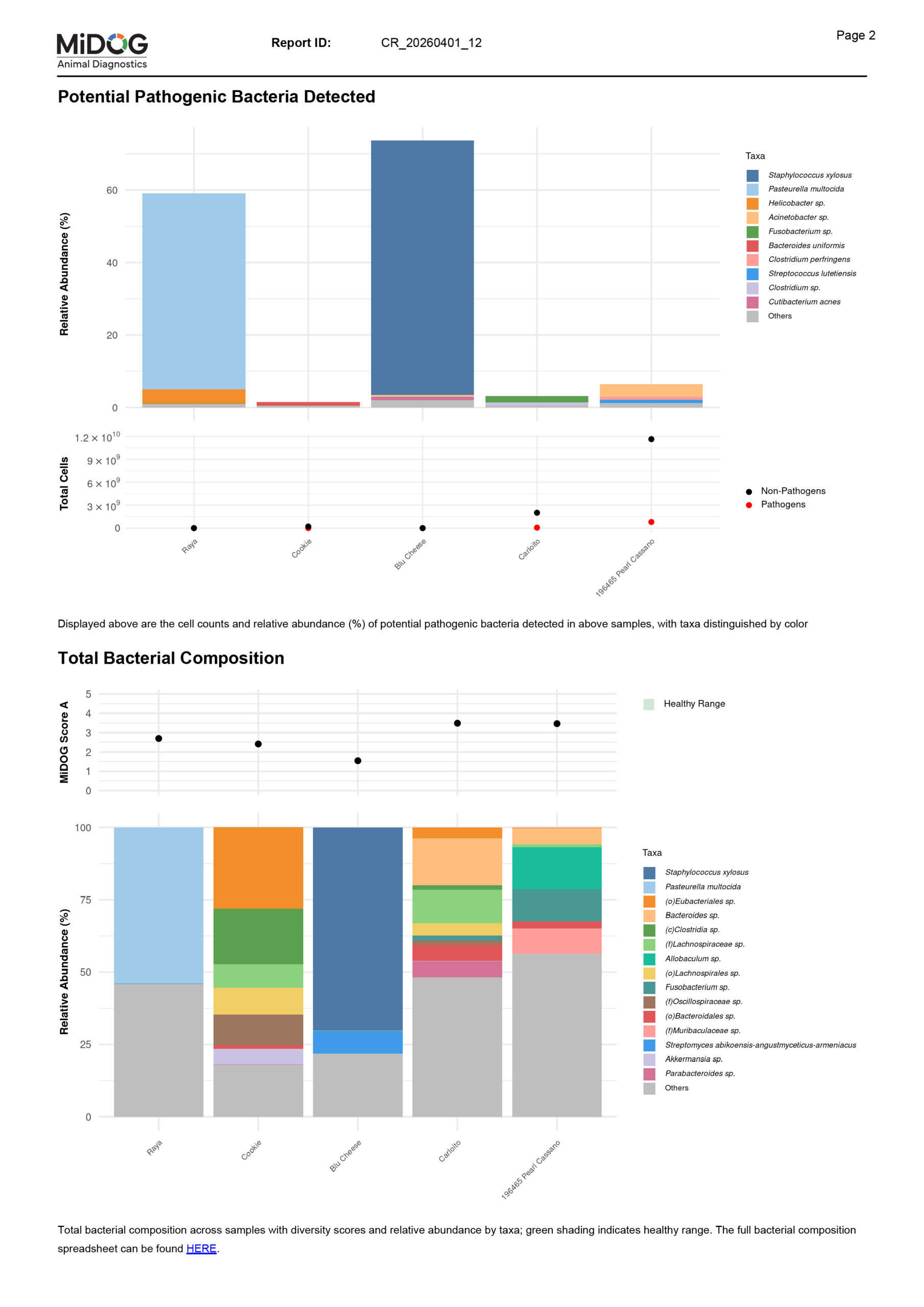
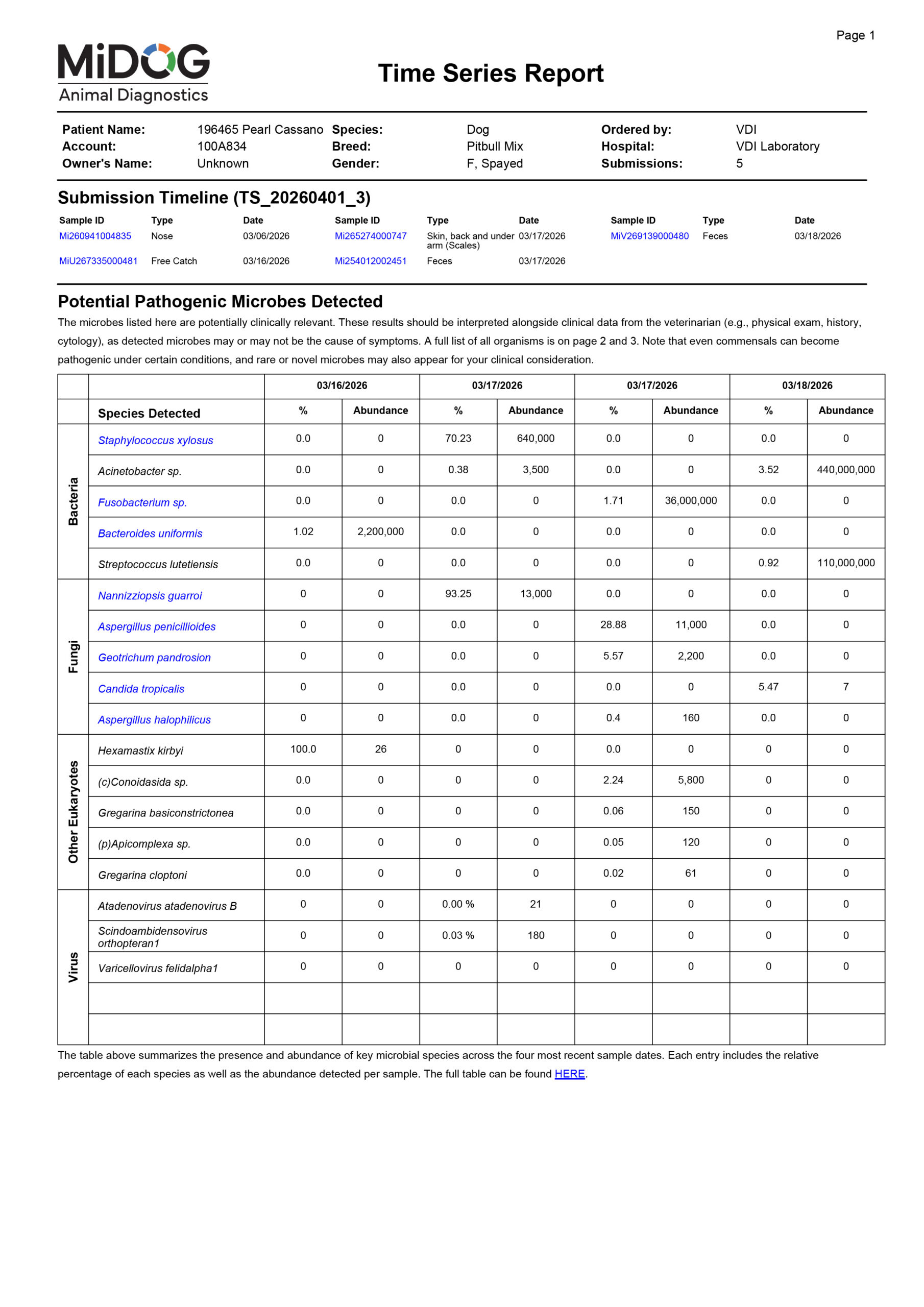



Portal Instructional Video
How To Use
Understanding the MiDOG Report
How to Use the MiDOG Swab Collection Kit | Step-by-Step Sample Collection & Shipping Guide