Growing Insight into the Microbiome of the Endangered: IUCN-Listed Patients in the MiDOG Lab
A look at the rare patients sequenced through MiDOG and an invitation to the clinicians, conservation programs, and field veterinarians helping us grow the record, sample by sample.
Endangered Species Day draws attention to species under pressure, and to the veterinarians, conservationists, researchers, and care teams working to protect them. We wanted to mark the day with something concrete: a look at the rare patients that have come across our labs.
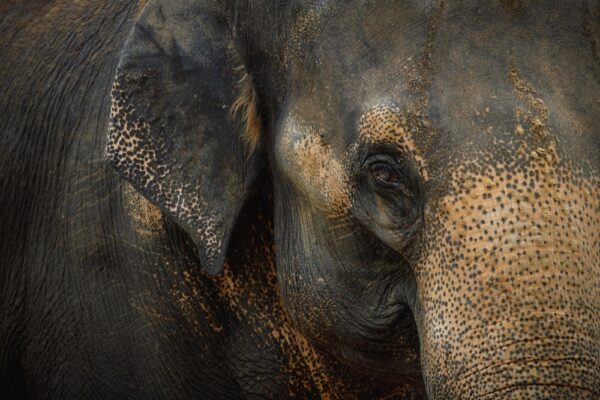
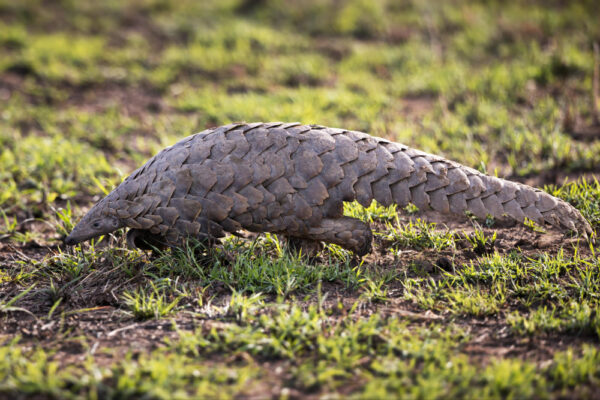
Our MiDOG All-in-One workflow has processed roughly 1,500 samples from around 30 different animals carrying an IUCN designation of Vulnerable, Endangered, or Critically Endangered (IUCN Red List, 2024). Pangolins. Western lowland gorillas. Sumatran and Bornean orangutans. Cotton-top tamarins. African penguins. Whooping cranes. Asian elephants. Fossas. California condors. Sea otters. Slow lorises. Axolotls. Gibbons and siamangs. Tortoises and turtles under managed care across multiple institutions – to name a few.
Each sample was sent to us as part of the animal’s veterinary care – a wound swab, a fecal screen, a respiratory workup, a post-op recheck. For the patient in front of the clinician, the results have helped inform their treatment decision. For the species behind the patient, the result became a quantitative record of the microbial community present on that body site, in that individual, at that point in time.
Especially for rare species, every record matters.
Endangered-species microbial data is different
For many companion animals, baseline microbiome ranges are increasingly well described across common body sites, age classes, and life stages.
For rare species like pangolins, fossas, and wild-hatched whooping cranes, they are not.
Published reference data for endangered and non-traditional species is sparse, scattered across institutions, and limited in anatomical scope – a recognized gap in the conservation literature (West et al., 2019; Trevelline et al., 2019). It does not cover the range of body sites and physiological systems a veterinarian samples in the field or in a zoo hospital.
When a wildlife veterinarian collects gastric fluid from a pangolin, a wound swab from a crane, or a coelomic-cavity sample from a tortoise, the resulting profile joins our growing record of what that taxon’s microbial community, on that surface, looked like at that point in time.
One profile is a snapshot. More profiles, processed the same way across body sites, institutions, and timepoints, begin to form valuable context — context that increasingly informs how clinicians can read and interpret the next case, on the next patient, from the next program.
One workflow, every anatomical system
The breadth of samples in wildlife and zoological practice is striking. Our All-in-One workflow has been applied to:
- Respiratory cases – blowhole chuffs and bronchoalveolar lavage from whales, air-sac plaques and granulomatous lung tissue from African penguins, choanal and nasal-discharge samples from tortoises with chronic respiratory disease
- Gastrointestinal cases – gastric fluid and rectal samples from pangolins and sea otters; fecal samples from elephants, orangutans, gibbons, lemurs, siamangs, condors, and cranes, including pooled FMT preparations and transfaunation doses
- Wound, abscess, and skin cases – a lemur with leg paralysis, a whooping crane with an open wound, a giraffe with claw abscesses, a fossa with mandibular and periocular swelling, an Asian elephant with a mandible abscess and an extracted tooth section
- Reptile-specific sites – carapace, plastron, shell-rot, and conjunctival samples from tortoises and turtles
- Reproductive and postmortem cases – uterine flushes, vaginal discharge, placenta, and milk secretion across rhinos, tapirs, and others; tissue, fluid, and biopsy samples submitted during necropsy
Each sample type enters the same workflow. Each result contributes to our growing internal record of data.
That consistency matters because wildlife medicine rarely fits into a standard diagnostic box. A single conservation program may need to evaluate gastrointestinal disease, respiratory signs, chronic wounds, skin lesions, reproductive disease, environmental exposure, and postmortem findings across multiple individuals and timepoints. The All-in-One workflow stabilizes every sample type and provides veterinarians with the flexibility to have kits on hand and store tubes at room-temperature once sampled without compromising viability for testing.
One workflow, many organism groups
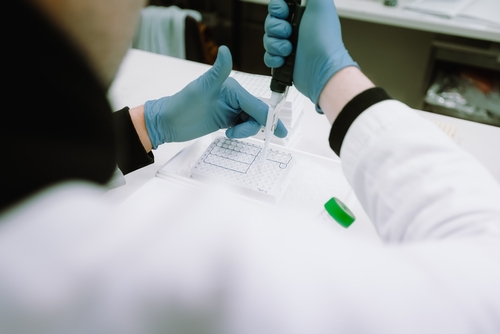
The MiDOG All-in-One workflow profiles bacteria, fungi, and other non-fungal eukaryotes – including protozoal and helminth-associated organisms – in a single assay, with each detected organism identified to the most specific taxonomic level the sequence supports.
That matters in wildlife medicine because the organism of interest is often not known in advance. A wound may involve anaerobic bacteria, environmental organisms, opportunists, or mixed communities. A gastrointestinal case may involve bacteria, protozoa, fungi, or a combination. A respiratory or postmortem sample may reveal fungal organisms quietly co-occurring with bacterial findings that a culture would have surfaced alone. Human infectious-disease work has shown that broad molecular detection can substantially expand what gets identified in complex clinical samples (Miller & Chiu, 2022), and that principle applies cleanly to rare and non-traditional species, where the clinical differential is often wider, and the priors are weaker.
As always, interpretation matters. We work to provide complete quantitative results that are valuable when read alongside clinical signs, sample type, pathology, organism biology, and veterinary judgment.
Why every sample matters
The populations behind many of these samples are small.
The African penguin was uplisted to Critically Endangered in October 2024 – the first penguin species ever to reach that status – after a more than 90% population decline since the mid-20th century (Sherley et al., 2024; IUCN Red List, 2024). The African forest elephant was reclassified as Critically Endangered in 2021 after an 86% decline over three decades, and the Asian elephant remains Endangered (Gobush et al., 2021; Williams et al., 2020). Sumatran orangutan populations are estimated at fewer than 15,000 individuals (Wich et al., 2016; Singleton et al., 2017). The Akikiki, a Hawaiian honeycreeper, has been reduced to only a handful of individuals in the wild. More than 17,000 animal species are currently listed in the IUCN Red List categories of Vulnerable, Endangered, or Critically Endangered (IUCN Red List, 2024).
For animals this rare, a single sequencing record is a contribution.
Enough records, across body sites and clinical contexts, become a useful reference for the next case, especially where baseline microbial data is otherwise limited or absent (Trevelline et al., 2019; West et al., 2019).
That is the quiet logic behind every endangered-species sample we run. Each one is, first, an answer for the patient in front of the clinician. Each one is, second, one more data point in what is known about that species’ microbial life.
Help us build the record together
Endangered-species care depends on many tools – habitat protection, field monitoring, rehabilitation, breeding programs, pathology, clinical medicine, and long-term population management. Broad microbial profiling is one piece of that larger effort, and one of the few that compounds in value the more consistently it is applied.
If you work with rare or endangered species – in any capacity – we’d like to work with you.
Zoological clinicians, wildlife and exotic veterinarians, conservation programs, sanctuaries, rehabilitation centers, university and research groups, studbook holders, AZA TAG members, and species-survival programs, field veterinarians sampling under remote conditions, and anyone caring for non-traditional species, we’d like to hear from you. Every submission strengthens what we can offer back on the next case, for your patient and for the program behind them.
We’re happy to talk through sample types, shipping logistics for field or remote conditions, study design for cohort or longitudinal work, and how to fold the assay into an existing diagnostic or research workflow.
To start a conversation, reach the MiDOG team at sales@midogtest.com or through your existing account representative.

References
IUCN Red List of Threatened Species (2024). International Union for Conservation of Nature. https://www.iucnredlist.org
West AG, Waite DW, Deines P, Bourne DG, Digby A, McKenzie VJ, Taylor MW. The microbiome in threatened species conservation. Biological Conservation. 2019;229:85–98.
Trevelline BK, Fontaine SS, Hartup BK, Kohl KD. Conservation biology needs a microbial renaissance: a call for the consideration of host-associated microbiota in wildlife management practices. Proceedings of the Royal Society B. 2019;286(1895):20182448.
Miller S, Chiu C. The Role of Metagenomics and Next-Generation Sequencing in Infectious Disease Diagnosis. Clinical Chemistry. 2022;68(1):115–124.
Sherley RB, Crawford RJM, Dyer BM, Kemper J, Makhado AB, Masotla MJ, Pichegru L, Pistorius PA, Roux JP, Ryan PG, Tom D, Upfold L, Visagie J, Waller LJ, Winker H. The African Penguin Spheniscus demersus should be considered Critically Endangered. Ostrich. 2024;95(3):181–187.
Gobush KS, Edwards CTT, Balfour D, Wittemyer G, Maisels F, Taylor RD. Loxodonta cyclotis (errata version). The IUCN Red List of Threatened Species. 2021;e.T181007989A204404464.
Williams C, Tiwari SK, Goswami VR, de Silva S, Kumar A, Baskaran N, Yoganand K, Menon V. Elephas maximus. The IUCN Red List of Threatened Species. 2020;e.T7140A45818198.
Wich SA, Singleton I, Nowak MG, et al. Land-cover changes predict steep declines for the Sumatran orangutan (Pongo abelii). Science Advances. 2016;2(3):e1500789.
Singleton I, Wich SA, Nowak M, Usher G, Utami-Atmoko SS. Pongo abelii. The IUCN Red List of Threatened Species. 2017.