

Veterinary Dermatology

Dr. Richard Harvey and His Veterinary Journey as a Dermatology Specialist – MiDOG Interview Part 2
This is part 2 of our exclusive interview with Dr. Richard Harvey. The first part covered Next-Generation Sequencing in Veterinary Medicine which can be found here. Part 2 will be covering questions for Dr. Harvey that are a little more personal and career-oriented for us and our audience to get to know him a little bit better and shed light on his background, interests, and veterinary journey experience. A Look Into Dr. Harvey’s Veterinary Journey To start off, could you share with us your jour

Lumps and Bumps on a Cat’s Skin
Cats are affectionate creatures (albeit on their own terms) and when Fluffy demands that scratch under her chin or a stroke down her back, you may come across a lump, bump, or even some crusts. The fastidious nature of cats means that what you’ve found isn’t likely to be foreign material stuck in her fur, but actually some changes within the skin itself. MiDOG Next-Gen Sequencing Technology may be appropriate in assisting with a diagnosis, but first, let’s discuss the types of skin lesions you m
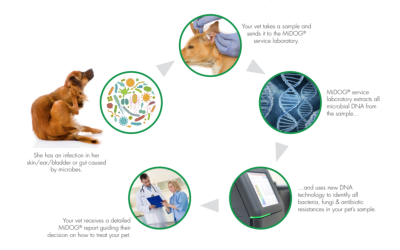
Next-Gen DNA Sequencing Technology in Veterinary Medicine
DNA (also known as deoxyribonucleic acid) has long been nicknamed the “blueprint for life”, providing the genetic codes that make existence for all organisms possible [1]. From animals to bacteria to fungi, each organism’s genetic code is what makes them unique and can also provide an abundance of information for clinical uses. Specifically, the development of high throughput molecular technologies alongside bioinformatics analyses in the 21st century has radically changed the abilities of veter

Skin Microbiota of Quaker Parrots: Advancements in Avian Clinical Diagnostics
Feather damaging behavior (FDB) is particularly common in captive birds, with an estimated prevalence rate of 11.7% in psittacines [1]. FDB can be difficult for pet owners and veterinarians to prevent, and can often be debilitating for your feathery friend. Fortunately, new research on this difficult-to-treat condition is on the horizon! In the past, diagnosing parrot skin diseases has proven to be difficult because there has not been a baseline for the parrot epidermal microbiome, both in birds

Interview with Dermatology Specialist: Dr. Alissa Rexo (Part 2)
Antibiotic resistance is an increasing global problem, both for public and animal health and welfare. Considering antibiotic resistance is influenced not only by human and animal antibiotic use, but also by intrinsic resistance exhibited by some pathogenic microorganisms, understanding the clinical implications of animal skin microbiomes is becoming increasingly important. With contemporary research employing the use of Next-Gen Sequencing to aptly characterize the skin microbiome of various ani

Interview with Dermatology Specialist: Dr. Alissa Rexo
Antibiotic resistance is an increasing global problem, both for public and animal health and welfare. Considering antibiotic resistance is influenced not only by human and animal antibiotic use, but also by intrinsic resistance exhibited by some pathogenic microorganisms, understanding the clinical implications of animal skin microbiomes is becoming increasingly important. With contemporary research employing the use of Next-Gen Sequencing to aptly characterize the skin microbiome of various ani
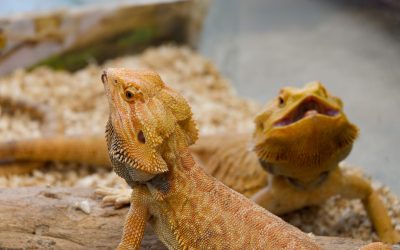
Reptilian Fungal Infections: Diagnosing Yellow Fungus Disease
Who you calling yellow-bellied? It may not be your reptile’s lack of courage, but rather an infection causing the yellow hue on your scaly friend’s skin. This infection goes by several names, including Chrysosporium anamorph of Nannizziopsis vriesii (CANV), Yellow Fungus Disease (YFD), CANV mycosis, and most recently Onygenalean Dermatomycoses [1]. Debate surrounding the name of the disease stems largely from advancements in technology that have revealed several microorganisms can cause this inf

Pruritus in Dogs: Home Remedies for Dogs With Itchy Skin
They scritch and they scratch, but the itch doesn’t seem to go away! Pruritus, the medical term for itching, is one of the most common reasons for dog parents to bring their furry friend to the veterinarian [1]. Pruritus can indicate several medical conditions, ranging from flea allergy dermatitis, seasonal allergies, food allergies, contact dermatitis, sarcoptic mange, and more [1]. Moreover, pruritus has a multifactorial etiology that can be further complicated by secondary bacterial infection
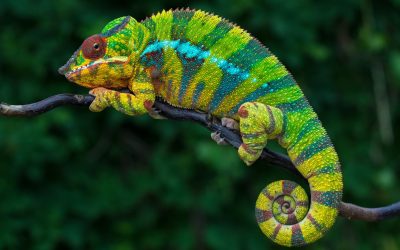
Three Bacterial Infections Your Chameleon May Hide From You
Chameleons are masters of disguise, especially when it comes to their well-being. Evolutionarily, chameleons have become adept at hiding possible sicknesses from predators, making it difficult for pet owners to identify warning signs of various maladies. Consequently, understanding possible sources of infections and how they manifest is critical for chameleon owners. It is important to note that while this article is going to focus on bacterial infections, there are several other diseases (rangi

Essential Oils For Dogs: A Risk Not Worth Taking
Essential Oils Background For those who haven’t yet taken the deep dive into the essential oils fad, here’s a quick breakdown of what they are. Essential oil is the final extract from a plant when it is exposed to either steam distillation, cold-presses, or different organic solvents. The process of extracting essential oil from a plant basically concentrates a lot of the naturally occurring compounds in the plant into an oil that can be readily used for a variety of purposes. Essential oils can